Surfaces That Withstand Year-Round UV Exposure
Sealcoating in Orlando for asphalt parking lots and driveways facing accelerated deterioration from Florida's humid climate and intense sunlight
High UV intensity and seasonal wet weather cycles degrade unsealed asphalt faster in Orlando than in northern climates where freeze-thaw dominates pavement damage. US Asphalt & Construction applies protective sealcoating to commercial and residential surfaces across Orlando, Kissimmee, Winter Park, and Castleberry, with extended service into Tampa and St. Petersburg for clients managing multi-location properties. The coating forms a barrier against oxidation and moisture penetration, which are the primary causes of surface cracking and color fading in Central Florida's climate.
Sealcoating addresses the degradation pattern specific to Florida: ultraviolet radiation breaks down asphalt binders, turning surfaces gray and brittle, while humidity allows water to infiltrate small surface voids and expand the damage during heat cycles. The service is performed as post-paving protection on new installations or as periodic maintenance on existing asphalt that shows early signs of oxidation before structural cracks develop.
Arrange an evaluation to determine whether your asphalt is at the optimal stage for sealing or requires surface repairs before coating application.
What Proper Sealcoating Requires in Florida Conditions
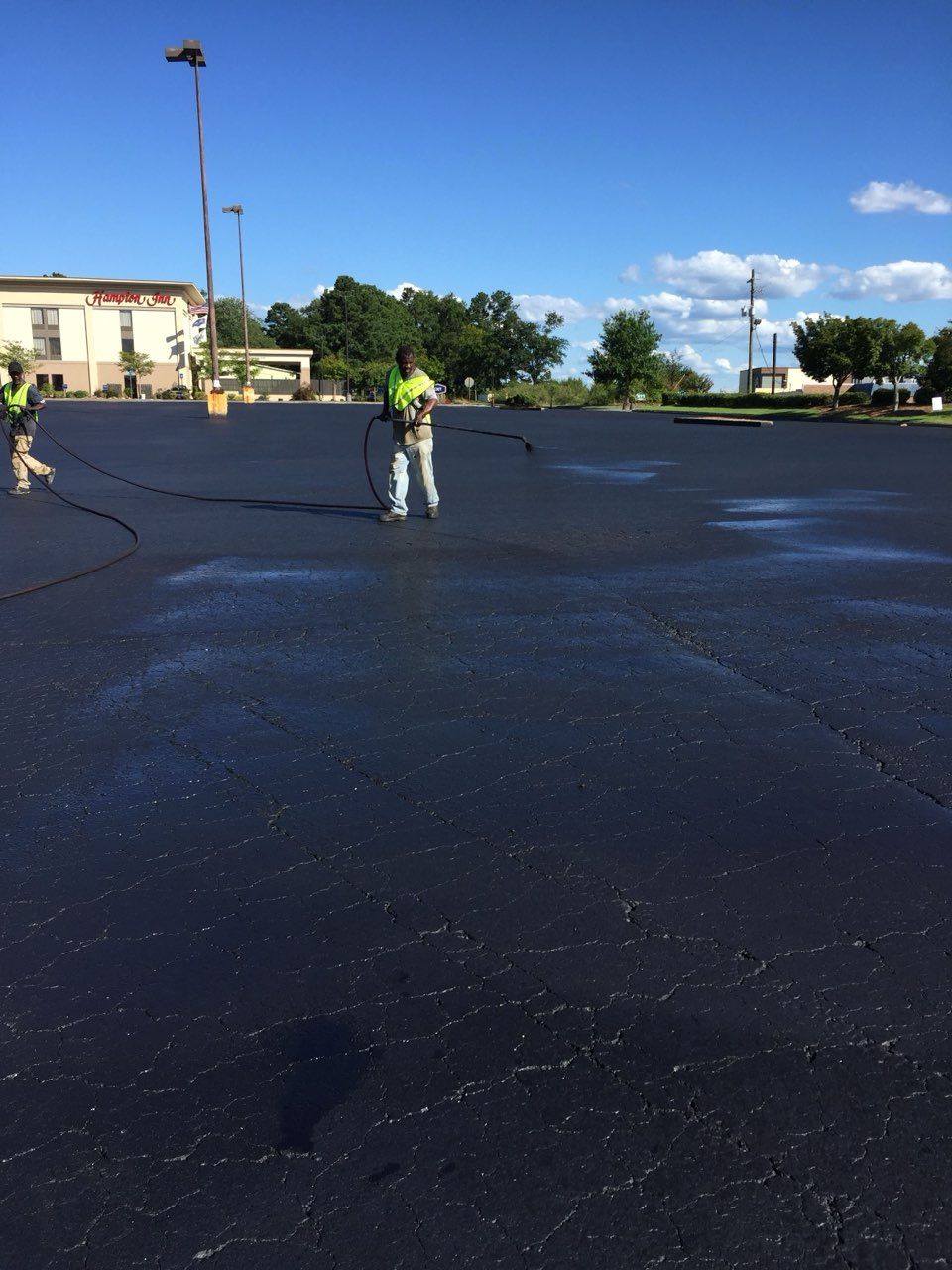
The application process involves surface cleaning to remove debris and oils, followed by sealant material designed for high-temperature stability that won't soften during summer when pavement temperatures routinely exceed one hundred forty degrees. Your lot or driveway must be dry and free of standing water, which means scheduling during Orlando's dry season from October through May produces the most consistent results, though applications proceed year-round with weather monitoring to avoid afternoon storm interference.
Once cured, you notice the surface returns to a dark, uniform appearance and water beads off rather than soaking into the pavement texture. The coating reduces the rate at which UV radiation oxidizes the asphalt binder, extending the interval between resurfacing projects and maintaining a smoother texture that's easier to sweep and maintain for commercial properties with regular cleaning schedules.
Sealcoating does not repair existing cracks or base failures; those issues require patching or structural work before sealing provides effective protection. Properties with heavy traffic or delivery vehicle use may need reapplication every two to three years as the coating wears under repeated tire contact and exposure to Florida's relentless sun, while residential driveways with lighter use often maintain protection for four to five years before recoating becomes necessary.
Common Questions About This Service
Clients managing asphalt in Orlando's climate typically want to understand how sealcoating fits into their maintenance cycle and what results to expect.
How does sealcoating extend pavement life in Orlando?
The coating blocks UV radiation from oxidizing the asphalt binder and prevents water from penetrating surface voids where it accelerates crack formation during thermal expansion cycles common in Florida's daily temperature swings between morning cool and afternoon heat.
What preparation happens before sealant application?
The surface is cleaned of dirt, vegetation, and oil stains that would prevent bonding, and any existing cracks are filled with rubberized material to create a uniform base that allows the sealant to form a continuous protective layer across the entire pavement.
When should sealcoating be applied after new paving?
Fresh asphalt needs ninety days to cure fully before sealing, allowing volatiles in the binder to evaporate so the sealant bonds properly without trapping gases that would cause bubbling or premature coating failure in high-heat conditions.
Why do some lots in Winter Park and Castleberry show uneven coating wear?
High-traffic lanes and turning areas experience more tire friction, which wears the sealant faster than low-use zones, and areas under tree cover that stay damp longer during wet season see slower drying and increased algae growth that degrades the coating surface over time.
What happens if sealcoating is applied to damaged asphalt?
The coating will not repair structural issues like base failure or deep cracking; it only protects sound asphalt from further UV and moisture damage, which is why evaluation before application identifies whether patching or resurfacing should precede the sealcoating process.
US Asphalt & Construction integrates sealcoating with paving and maintenance services across a multi-city service area, applying the same protocols refined over decades in Central Florida's demanding climate. Schedule a property assessment to confirm your asphalt's readiness for sealing and receive a timeline based on current weather patterns and curing requirements.