Markings That Remain Visible Through Florida Weather
Line Striping in Orlando for parking lots and pavement requiring durable markings that withstand heat fade and comply with ADA accessibility standards
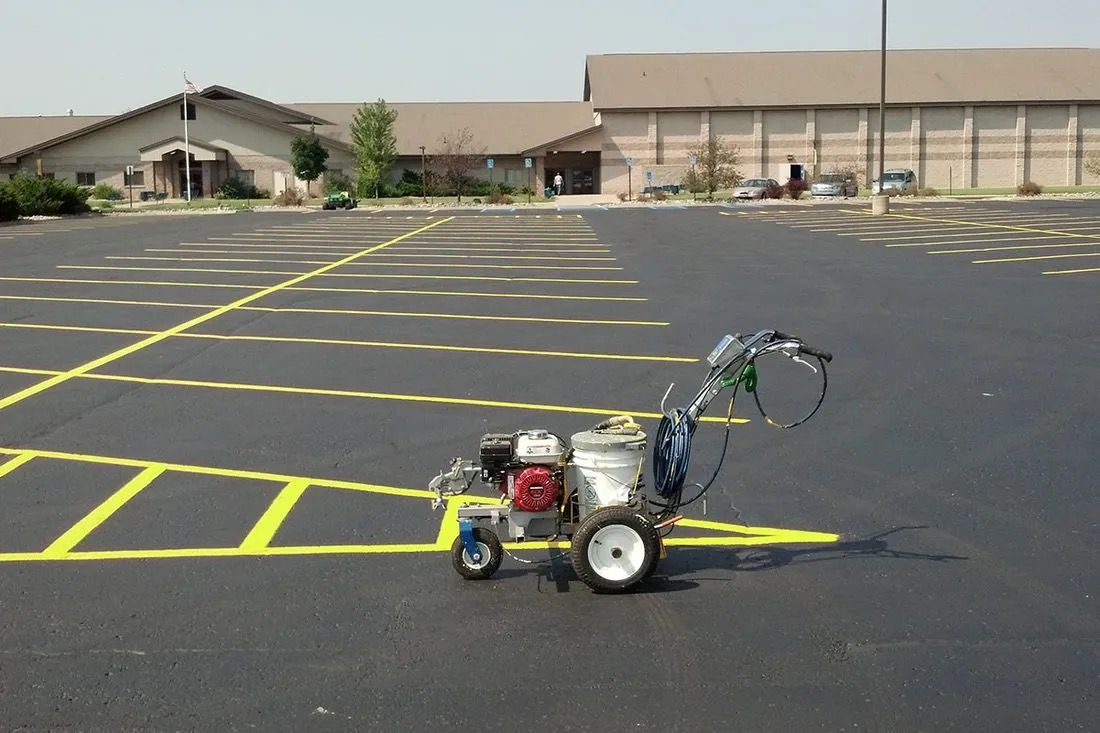
Clear, durable line striping separates parking spaces, directs traffic flow, and marks handicap zones on commercial lots where faded or missing markings create confusion and liability exposure for property owners. Pavement temperatures in Orlando routinely exceed one hundred fifty degrees during summer, accelerating paint fade and wear from tire contact in high-traffic lanes and turning areas. US Asphalt & Construction applies parking lot and pavement striping across Orlando, Kissimmee, Winter Park, and into Tampa and St. Petersburg metro areas, using paint formulations tested for Florida's UV intensity and weather cycles that cause rapid deterioration of standard coatings not rated for year-round sun exposure.
The service addresses both new installations where striping completes the paving process and existing lots where markings have faded to the point that space boundaries and directional arrows are no longer visible during evening hours or wet conditions. ADA compliance requires specific dimensions and placement for accessible spaces, which means striping must meet regulatory standards to avoid citations and ensure safe access for customers with mobility limitations.
Schedule a re-striping assessment to determine which markings require immediate attention and confirm paint specifications for your lot's traffic volume.
Why Striping Durability Varies Across Central Florida Lots
Paint application involves surface cleaning to remove oils and debris that prevent adhesion, followed by layout marking to confirm space dimensions and directional flow patterns before paint goes down. You receive parking space lines, directional arrows, handicap symbols, fire lane markings, and safety zone boundaries applied using traffic-rated paint that cures to resist tire abrasion and UV degradation common in Florida's climate.
After striping, your lot displays clearly defined spaces that guide drivers during peak hours and reduce door-ding incidents from vehicles parked too close together. Handicap spaces meet width and approach zone requirements specified by ADA standards, and directional arrows remain visible even after months of exposure to afternoon thunderstorms and intense sunlight that fade markings on lots using economy paint not formulated for high-heat, high-UV environments.
Striping performed as part of new paving waits until the asphalt cures sufficiently to accept paint without bubbling or adhesion failure, while re-striping on existing lots may require crack filling and surface preparation in worn areas before paint application. High-traffic commercial properties in Winter Park and Castleberry often need re-striping every eighteen to twenty-four months as tire friction wears paint faster in entrance lanes and central aisles compared to perimeter spaces that see occasional use during peak business periods.
What Property Owners Usually Ask
Commercial property managers across Orlando and Tampa Bay typically want to understand striping durability, compliance requirements, and maintenance intervals before scheduling work.
What preparation happens before striping application?
The pavement is swept or pressure-washed to remove dirt, oil, and loose debris that would prevent paint adhesion, and existing faded markings are identified so new lines align with previous layouts or adjust to updated space dimensions required by current ADA standards.
How does Florida heat affect striping longevity?
High pavement temperatures cause standard paint to soften and wear faster under tire contact, while UV radiation fades color intensity within months, which is why traffic-rated formulations with higher heat resistance and UV inhibitors are used on lots in Orlando where year-round sun exposure exceeds paint performance tested in temperate climates.
When should re-striping be scheduled in Central Florida?
Lots showing faded lines, worn arrows, or illegible handicap symbols need immediate attention to maintain compliance and customer safety, with most commercial properties requiring re-striping every one to two years depending on traffic volume and paint quality used during previous applications.
What ADA compliance issues appear most often?
Handicap spaces lacking proper width, missing access aisle markings, or placed too far from building entrances fail accessibility standards and expose property owners to citations, which is why striping layout must confirm dimensional and placement requirements before paint application begins.
Why do some markings fade faster than others on the same lot?
High-traffic lanes and turning areas experience more tire friction, which wears paint faster than low-use perimeter spaces, and areas under tree cover that stay damp longer during wet season see algae growth and moisture damage that degrades paint adhesion and color retention over time.
US Asphalt & Construction integrates striping with paving services and offers standalone re-striping for commercial clients managing properties across a multi-city service area. Arrange a lot evaluation to review current marking condition, confirm ADA compliance status, and receive a timeline based on weather conditions and curing requirements for your specific pavement type.