Commercial Lots Engineered for Heavy Seasonal Traffic
Parking Lot Paving in Orlando for commercial properties requiring durable asphalt that resists Florida's heat cycles and multi-acre traffic loads
Commercial parking lots across Orlando, Kissimmee, Winter Park, Tampa, and St. Petersburg face simultaneous stress from high vehicle volumes, delivery truck loads, and year-round UV exposure that cracks poorly installed asphalt within the first few years. Your property receives full parking lot installation or resurfacing through a process that begins with base preparation and extends through compaction of heat-resistant asphalt mixes tested for Central Florida's climate. US Asphalt & Construction handles multi-acre installations for commercial clients who need repeatable results across properties in a four-county region, applying protocols developed over twenty-five years in the paving industry.
The installation addresses two primary failure modes in Florida lots: base degradation from seasonal wet weather that saturates subgrade materials, and surface rutting from asphalt that softens under extreme temperatures when binder grades are not matched to local heat conditions. Full lot assessment confirms whether existing pavement can be overlaid or requires removal and reconstruction to meet current load requirements for delivery vehicles and peak customer parking demand.
Request a detailed estimate based on your lot's current condition, drainage requirements, and daily traffic patterns to confirm project scope and timeline.
What You Notice Once Full Lot Installation Completes
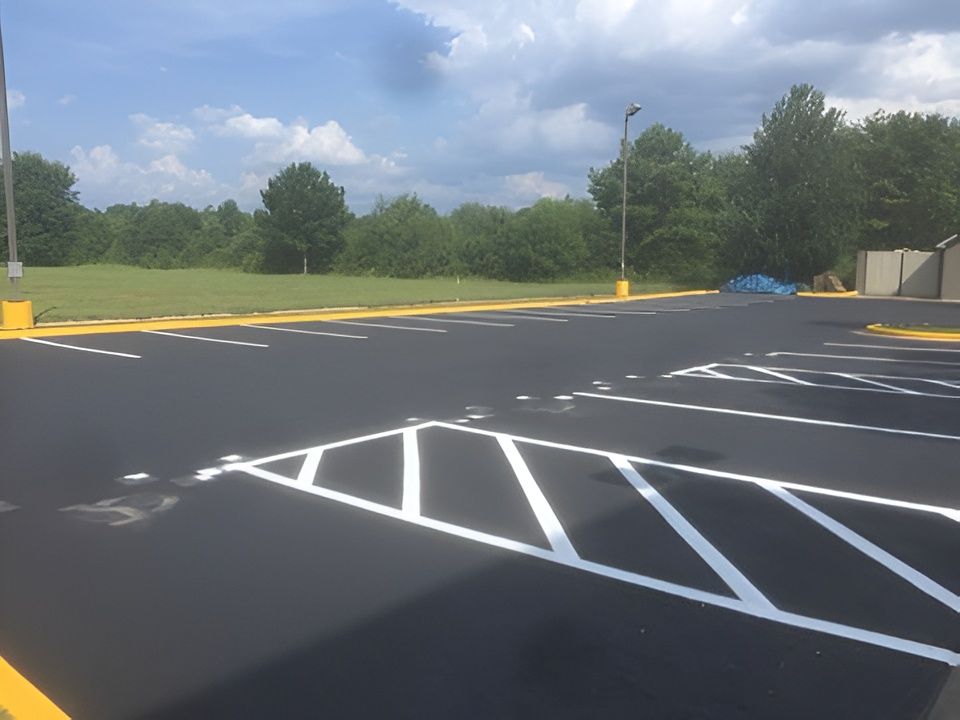
Your project moves through excavation of failing sections, base grading to correct drainage slopes, asphalt application using mixes with binder grades rated for high softening points, and compaction that eliminates voids where water would infiltrate and weaken the structure. Multi-acre installations integrate striping, ADA-compliant space marking, and directional flow indicators applied as part of the final phase once the asphalt cures to receive paint adhesion.
After completion, the lot drains quickly during afternoon thunderstorms without forming puddles that accelerate surface wear, and the pavement remains firm under delivery truck axle loads even when temperatures exceed one hundred fifty degrees during summer. Properly compacted asphalt resists rutting in high-turn areas near entrances and maintains a smooth surface that reduces vehicle wear and improves pedestrian safety across access lanes and walking paths.
The work often includes coordination with local stormwater regulations in Winter Park and surrounding areas where runoff management requires perimeter grading and connection to retention systems. Projects replacing lots installed before current codes may need base depth increased to handle modern vehicle weights, which means removal and reconstruction rather than overlay to avoid future structural failure that disrupts business operations and creates liability concerns.
Answers to Frequent Service Questions
Commercial property managers often ask about the process, timeline, and decisions involved in full parking lot paving before projects begin.
What determines whether a lot needs complete removal or overlay?
If the existing asphalt shows alligator cracking, base sinking, or widespread drainage failure, removal allows correction of underlying problems that overlay cannot fix, whereas lots with minor surface wear on stable bases can be resurfaced to extend life without full reconstruction expense.
How does the asphalt mix differ for commercial lots in Orlando?
Binder grades are selected for higher softening points to prevent rutting under heavy loads when pavement heats beyond one hundred forty degrees, and aggregate sizing is adjusted for surface texture that drains water quickly while supporting smooth vehicle movement and minimizing tire noise.
What preparation happens before new asphalt installation?
The base is excavated to design depth, soft spots are removed and replaced with compacted aggregate, and slopes are graded to direct water toward drainage systems that handle Central Florida's high-intensity rainfall without ponding on the pavement surface.
When should commercial lot paving be scheduled?
Dry months from October through May reduce weather delays and allow optimal curing conditions, though projects with tight deadlines proceed year-round using accelerated protocols and rain contingency plans to avoid disruption during critical phases when businesses cannot close for extended periods.
Why do some lots in Tampa and St. Petersburg crack faster than others?
Inadequate base compaction, improper drainage grading, or use of asphalt mixes not rated for Florida's UV and heat exposure cause premature failure, which is why material selection and installation standards must match regional climate stressors rather than generic specifications used in states with cooler, less humid conditions.
US Asphalt & Construction operates across Orlando metro and Tampa Bay handling projects from small retail lots to multi-acre commercial complexes, integrating paving with striping and removal services for clients managing multiple properties. Schedule an on-site assessment to review your lot's base condition, traffic load requirements, and drainage needs before finalizing project specifications and start dates.