
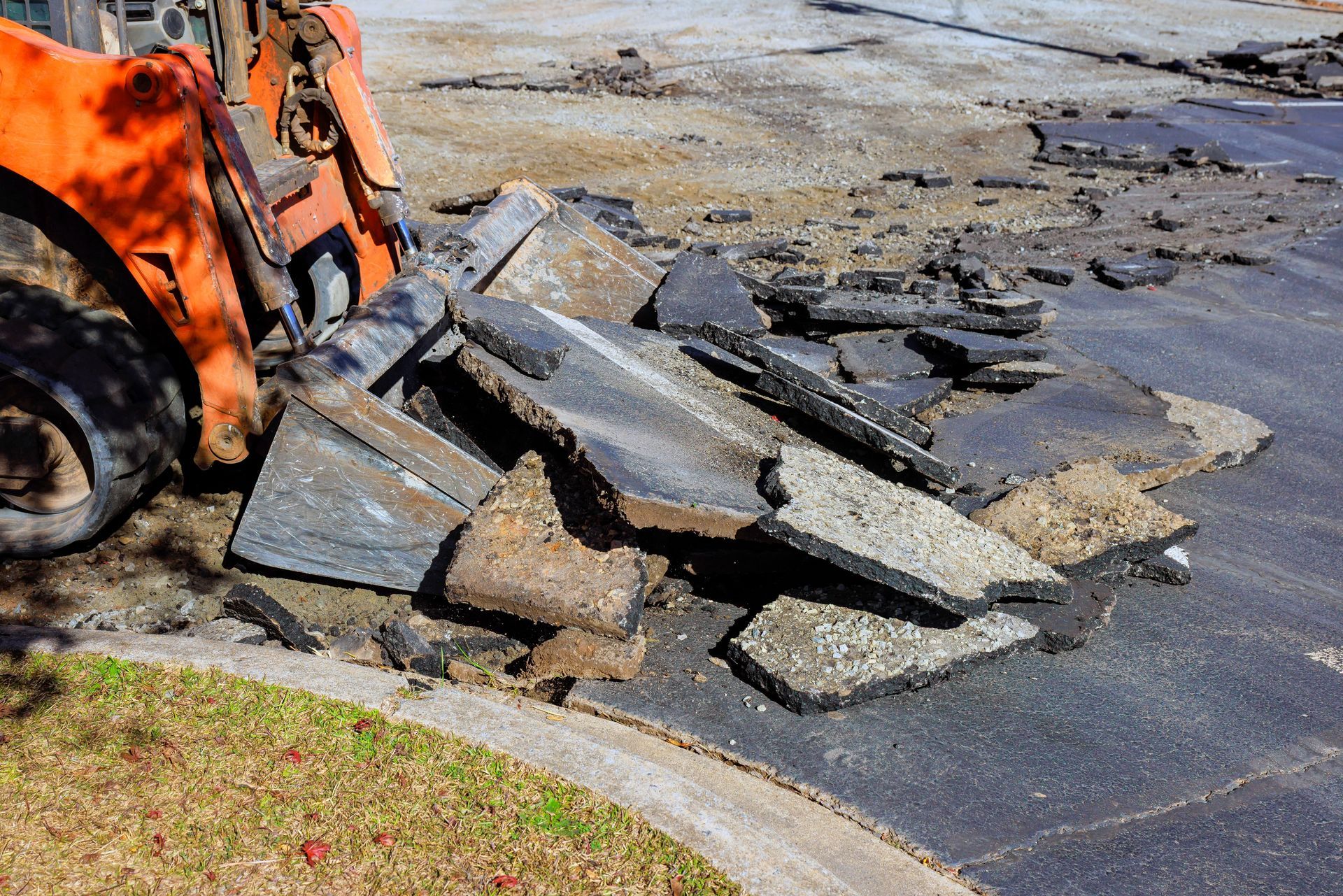
Site Prep for Lot Rebuild and Redevelopment
Parking Lot Removal in Orlando for commercial properties requiring asphalt tear-out after weather damage or during renovation projects that need base correction
Aging asphalt across Orlando, Kissimmee, Winter Park, and Castleberry develops alligator cracking, base failure, and drainage problems that cannot be corrected through overlay or surface repairs, requiring full removal before new pavement installation restores functionality and safety. Florida's heat cycles crack older asphalt installed before current climate-specific mix standards, while wet season saturation undermines bases that were not designed for Central Florida's high-volume rainfall and rapid infiltration. US Asphalt & Construction removes existing asphalt and prepares sites for new installations or alternative use, handling excavation, debris hauling, and base grading that enables lot rehabilitation for commercial properties across a four-county service area.
The removal process excavates failed asphalt down to the base layer, identifies soft spots and saturated subgrade materials that caused the original failure, and grades the exposed surface to correct drainage slopes before new pavement goes down. Properties undergoing commercial renovation often need removal to accommodate updated building footprints, utility installations, or stormwater management systems required by current regulations that were not in place when the original lot was paved decades earlier.
Schedule a property evaluation to assess whether your lot requires full removal or can be rehabilitated through selective repairs and overlay work.
Why Striping Durability Varies Across Central Florida Lots
Your project involves mechanical excavation of the asphalt layer, hauling debris to approved disposal facilities, and exposing the base for inspection to confirm whether additional depth or material replacement is needed before new installation. The process reveals underlying drainage issues, utility conflicts, or soil stability problems that were not visible when asphalt covered the site, allowing those conditions to be addressed during reconstruction rather than causing future pavement failure.
Once removal completes, you notice the site is graded to direct water away from structures and toward designated drainage points, eliminating the ponding and base saturation that contributed to the original asphalt failure. The exposed base provides a clean starting point for new pavement installation with proper depth, compaction, and material specifications matched to current vehicle loads and Central Florida climate conditions rather than outdated standards from the original construction.
Removal projects in Tampa and St. Petersburg commercial corridors often coordinate with phased redevelopment where portions of the lot remain operational while sections are torn out and rebuilt to minimize business disruption. The work generates significant debris volume that requires roll-off containers and multiple haul trips to disposal sites, which affects project timelines and site access during the removal phase before base preparation and new paving can begin.
Questions Before Starting Your Project
Property owners facing lot removal decisions typically want to understand the process, timeline, and what happens after asphalt is torn out and hauled away.
What determines whether removal is necessary instead of overlay?
If the existing asphalt shows widespread alligator cracking, base sinking, or drainage failure that allows water to pond and infiltrate, removal provides access to correct underlying problems that overlay cannot address without future pavement failure within a few years of resurfacing work.
How is debris handled during removal in Orlando?
Excavated asphalt is loaded into roll-off containers or dump trucks and hauled to recycling facilities where it is crushed and reused as base material for future projects, reducing disposal costs and environmental impact compared to landfill dumping of pavement debris.
When should removal be scheduled for commercial properties?
Projects proceed during off-peak business periods when possible, though lots requiring immediate closure due to safety hazards from failing pavement move forward regardless of season, with phased removal allowing portions of the lot to remain accessible during construction if site layout permits staged work.
What happens to the base after asphalt removal?
The exposed base is inspected for soft spots, inadequate depth, or poor drainage grading, with corrections made during the removal phase so new pavement installation begins on a properly prepared surface that meets current load and climate requirements for Central Florida commercial lots.
Why do some lots in Winter Park require removal decades sooner than others?
Inadequate base preparation during original installation, poor drainage design that allowed water infiltration, or use of asphalt mixes not rated for Florida heat and UV exposure cause premature failure, while lots built to proper standards with climate-appropriate materials last significantly longer before requiring removal and rebuild.
US Asphalt & Construction handles tear-out and new installation cycles for commercial clients across Orlando metro and Tampa Bay, integrating removal with paving services using protocols refined over twenty-five years. Request a site assessment to confirm removal scope, debris volume estimates, and reconstruction timeline based on your property's specific conditions and operational requirements.